Source 4 Stroke Gas Enduro Motorcycle for off-road, racing, and trails
Explore 29 listings of 4 Stroke Gas Enduro Motorcycle options with varying engine sizes, power outputs, and dimensions. Buyers can compare specifications like displacement, cooling methods, and fuel capacity to find suitable models for diverse terrains.
Key considerations
Products List


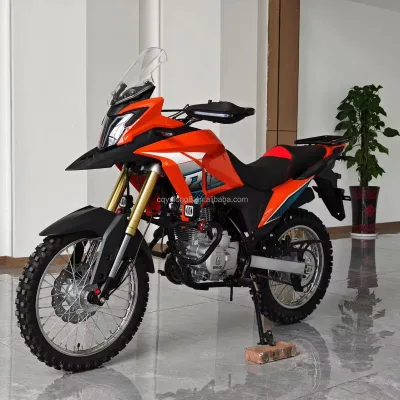
300cc Racing Enduro dirt bike 2 Stroke off Road Motorcycle Gas sport
$2829.00 - $3500.00
MOQ: 10 Pieces


OEM 250cc 4-Stroke off Road Motorbike Enduro Gas Motorcycle dirtbike
$714.00 - $1100.00
MOQ: 10 Pieces


Comprehensive Sourcing Guide
Strategic Sourcing Guide for 4 Stroke Gas Enduro Motorcycles
The global market for off-road and enduro motorcycles has seen a significant shift toward four-stroke engine architectures, driven by the need for improved fuel efficiency, lower emissions, and smoother power delivery compared to traditional two-stroke units. For procurement professionals and B2B buyers, identifying the correct 4-stroke gas enduro motorcycle involves a rigorous analysis of technical specifications, regulatory compliance, and supply chain reliability. This guide provides a structured approach to sourcing these vehicles, grounded in observed market data and verified product attributes, ensuring that procurement decisions are based on factual evidence rather than speculative claims.
Technical Architecture and Engine Specifications
The defining characteristic of a 4-stroke enduro motorcycle is its engine cycle, which completes intake, compression, power, and exhaust strokes in a single revolution sequence. This architecture generally offers better torque characteristics at lower RPMs, making it ideal for technical terrain where precise throttle control is essential. When evaluating potential inventory, buyers must verify the specific engine configuration. Market observations indicate a prevalence of 4-stroke engines in displacement ranges spanning from 126cc to 250cc, with specific models featuring a 223cc displacement.
Critical technical parameters for verification include the bore and stroke dimensions, which dictate the engine's breathing and power potential. For instance, a 223cc unit may exhibit a bore and stroke of 65.5mm by 66.2mm. Buyers should also scrutinize the maximum power and torque outputs, as these figures directly influence the vehicle's performance envelope. A typical high-performance configuration in this segment might deliver a maximum power of 12kW at 7000r/min and a maximum torque of 17.5N·m at 5500rpm. Furthermore, the ignition system is a vital component; most modern units utilize Capacitor Discharge Ignition (CDI) systems for reliability and maintenance-free operation.
The cooling method is another decisive factor for enduro applications. While liquid cooling is common in high-end racing models, many robust enduro units in the supply chain utilize oil cooling or air-oil cooling systems. For example, specific models in the 250cc class have been observed with oil cooling mechanisms, which simplifies the mechanical design and reduces the risk of coolant leaks in remote off-road environments. The fuel capacity also varies by model, with observed ranges including a 14.5L tank, which is crucial for determining the operational range between refueling stops during long-distance enduro events.
Compliance, Certification, and Regulatory Standards
Navigating the regulatory landscape is a primary responsibility for B2B buyers importing or distributing motorcycles. The most frequently observed certification in the current market data for these vehicles is the CE mark, indicating conformity with health, safety, and environmental protection standards for products sold within the European Economic Area. However, the presence of a CE mark in a product listing does not automatically guarantee compliance with every specific national regulation; it serves as a baseline indicator that the manufacturer claims adherence to relevant directives.
Buyers must verify that the product standards align with the intended market's requirements. While specific dimensional standards are observed in the supply chain—such as a standard dimension of 1740mm x 740mm x 1080mm for certain models or 1245mm x 560mm x 800mm for others—these physical attributes must be cross-referenced with local vehicle type approval requirements. The origin of the manufacturing plays a significant role in compliance logistics. The majority of the observed supply originates from Zhejiang and Chongqing, China, regions known for their concentrated motorcycle manufacturing ecosystems.
When evaluating a supplier, procurement teams should request the full test reports associated with the CE certification. It is essential to distinguish between the product's general certification status and specific model approvals. The "17407401080MM" standard mentioned in product data refers to the packaging or overall dimensional footprint, which impacts shipping costs and storage requirements. Buyers should ensure that the supplier provides documentation proving that the specific model, such as the DB608 or DB701, meets the emission and noise standards of the destination country, as these vary significantly between regions.
Cost Drivers and Pricing Dynamics
The pricing structure for 4-stroke enduro motorcycles is influenced by a complex interplay of engine displacement, feature sets, and manufacturing origin. The observed market data reveals a wide price range, spanning from approximately $103 to $6,150 USD. This broad spectrum reflects the diversity of the product line, which includes entry-level models, mid-range utility bikes, and high-performance competition machines. The lower end of the price range likely corresponds to basic models with minimal customization or smaller displacement engines, while the upper end encompasses fully equipped units with advanced suspension, higher power outputs, and premium finishes.
Minimum Order Quantity (MOQ) is another critical cost driver. The market data indicates an MOQ range of 1 to 100 units. This flexibility allows buyers to scale their procurement strategies based on their market size and risk tolerance. Small retailers or niche distributors may opt for an MOQ of 1 to test the market, whereas larger distributors might negotiate volumes closer to 100 units to secure better unit economics. The condition of the product is consistently listed as "New," which implies that the pricing includes the full manufacturing cost without depreciation, but buyers should verify if the price includes packaging costs, as some models are shipped in wooden boxes to prevent damage during transit.
Fuel type is a standard specification for these vehicles, with "Gas / Diesel" listed as the fuel source. However, in the context of enduro motorcycles, "Gas" typically refers to gasoline, as diesel engines are rare in this specific class of lightweight off-road vehicles. Buyers should clarify the exact fuel type in their contracts to avoid logistical errors regarding fuel availability in the target market. The customization options available, such as specific color schemes or accessory packages, can also influence the final landed cost, adding a variable layer to the base price.
Typical Applications and Operational Use Cases
The design philosophy of 4-stroke enduro motorcycles is tailored for versatility across various off-road environments. These vehicles are engineered to handle rough terrain, including dirt trails, rocky paths, and muddy conditions. The observed specifications, such as a ground clearance of 310mm and a wheelbase of 1340mm, suggest a design optimized for stability and obstacle negotiation. The tire specifications, such as 80/100-21 for the front and 110/90-18 for the rear, are indicative of a setup designed for traction on loose surfaces while maintaining durability.
One of the primary applications for these motorcycles is recreational off-roading. Enthusiasts utilize them for trail riding, where the smooth power delivery of the 4-stroke engine allows for controlled climbing and descending without the sudden power bursts characteristic of two-stroke engines. Additionally, these vehicles are increasingly used in professional enduro racing and competitive events. The maximum speed capabilities, observed up to 105km/h or 120km/h depending on the model, support high-speed sections of a race course, while the torque curves assist in technical sections.
Beyond recreation and sport, 4-stroke enduro motorcycles serve utility functions in agricultural and industrial settings. Their robust construction and ability to traverse difficult terrain make them suitable for patrol duties in large estates, forestry management, and emergency response in areas with poor road infrastructure. The electric and kick starter systems observed in the product data provide redundancy, ensuring the vehicle can be started even if the battery is depleted, a critical feature for remote operations. The net weight of these vehicles, ranging from 113kg to 139kg, balances portability with the structural integrity needed for off-road durability.
Supplier Evaluation and Origin Verification
Selecting the right supplier is paramount to ensuring product quality and supply chain continuity. The primary manufacturing hubs identified in the market data are Zhejiang and Chongqing, China. These regions host a dense network of motorcycle manufacturers, each with varying levels of quality control and production capacity. When evaluating a supplier, buyers should prioritize those who can demonstrate a consistent track record of producing 4-stroke engines and adhering to the specified standards.
Verification of the supplier's location is essential for logistical planning. The origin of the product, whether Zhejiang or Chongqing, will impact shipping routes, transit times, and customs procedures. Buyers should request detailed information regarding the factory's location to accurately calculate freight costs and lead times. Furthermore, the availability of customization services is a key differentiator among suppliers. The market data confirms that customization is available, allowing buyers to tailor products to specific market preferences, such as branding, color, or minor mechanical adjustments.
Buyers must also assess the supplier's ability to provide consistent quality across batches. The "New" condition of the products suggests that the supplier maintains a standard of manufacturing that avoids the sale of refurbished or used units as new. However, the variability in specifications, such as different model numbers (DB608, DB701, DB708, DBK13-CBS300, DBK14, DB-X12, KT2 250RE), indicates a diverse product portfolio. Buyers should ensure that the supplier has the capacity to fulfill orders for specific models without compromising on the quality of the engine or chassis.
Quality Control and Long-Term Procurement Considerations
Implementing a robust quality control (QC) protocol is essential for mitigating risks associated with bulk procurement. Given the mechanical complexity of 4-stroke engines, buyers should insist on pre-shipment inspections that verify critical components such as the ignition system, cooling method, and engine oil capacity. The observed engine oil capacities, ranging from 1.1L to 1.6L, must be accurate to ensure proper lubrication and engine longevity. Discrepancies in these specifications can lead to premature engine failure and costly warranty claims.
Long-term procurement considerations extend beyond the initial purchase. Buyers should evaluate the availability of spare parts and the supplier's support infrastructure. The presence of specific technical details, such as the battery type (12V 5Ah) and starter system (Electric/Kick), suggests that these components are standard and should be readily available. However, buyers must confirm the supply chain for these parts to ensure that maintenance can be performed locally without significant delays.
The packaging standard, often listed as a "Wooden Box" for certain models, is a critical factor in protecting the motorcycle during international shipping. Wooden packaging is generally more robust than cardboard and offers better protection against moisture and impact. Buyers should verify that the packaging meets international phytosanitary standards to avoid customs delays. Additionally, the lead time and production capacity of the supplier should be aligned with the buyer's inventory requirements. While specific lead times are not provided in the data, the MOQ range of 1-100 suggests that suppliers can accommodate both small and large orders, but buyers should negotiate clear timelines to ensure timely delivery.
In conclusion, sourcing 4-stroke gas enduro motorcycles requires a meticulous approach that balances technical specifications, regulatory compliance, and supplier reliability. By focusing on verified data points such as engine displacement, certification status, and origin, buyers can make informed decisions that align with their strategic objectives. The diverse range of models and specifications available in the market offers opportunities for customization and market segmentation, but success depends on rigorous due diligence and a clear understanding of the product's intended application.
FAQs
What engine types are available for 4 Stroke Gas Enduro Motorcycle models?
Available models feature 4-stroke engines with displacements ranging from 126cc to 250cc. Specific units may have a 223cc displacement with a bore and stroke of 65.5mm by 66.2mm, delivering up to 12kW of power.
Can buyers customize 4 Stroke Gas Enduro Motorcycle specifications?
Yes, customization is available for these vehicles to meet specific buyer requirements. This allows for tailored configurations while maintaining the core 4-stroke architecture and standard safety certifications like CE.
Which certification marks are commonly found on these motorcycles?
The CE certification is the most frequently observed mark on these products. This indicates conformity with European health, safety, and environmental standards, serving as a baseline for regulatory compliance.
How does the cooling method affect 4 Stroke Gas Enduro Motorcycle performance?
Many robust units utilize oil cooling to simplify mechanical design and reduce leak risks. This method is preferred for off-road durability, though some models may employ different cooling strategies based on displacement.
What is the typical minimum order quantity for these motorcycles?
The minimum order quantity ranges from 1 to 100 units depending on the supplier. This flexibility allows small retailers to test the market while larger distributors can negotiate higher volume orders.
Where are the primary manufacturing locations for these motorcycles?
The majority of observed supply originates from Zhejiang and Chongqing in China. These regions host concentrated manufacturing ecosystems that produce various models with consistent quality standards for export.